
Introduction: Fighterjet
Fighterjets are the epitome of speed, power, and precision in the modern military arsenal. With their sleek designs, cutting-edge technology, and lethal firepower, they dominate the skies and play a crucial role in national defense, aerial superiority, and deterrence strategies. In this article, we will explore everything you need to know about fighterjets—from their history and evolution to the top models in service today, how they work, and what the future holds.
Table of Contents
What is a Fighterjet?
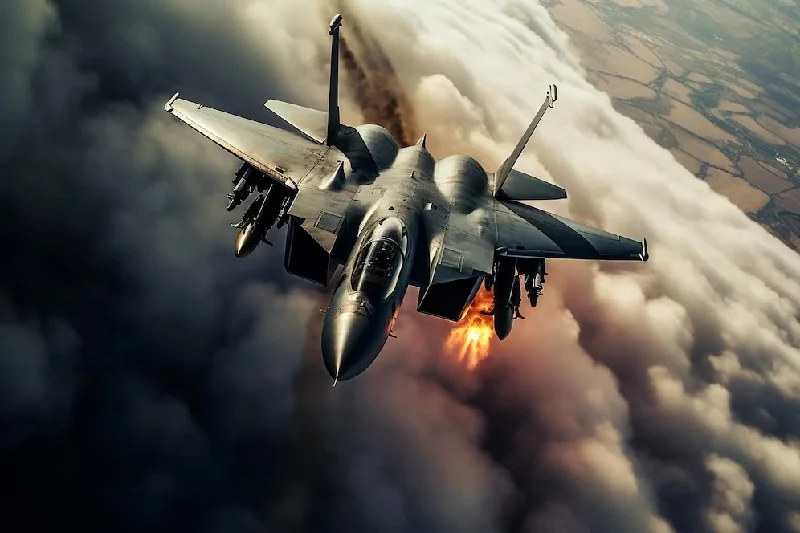
A fighterjet, also known as a fighter aircraft or combat aircraft, is a military aircraft specifically designed for air-to-air combat against other aircraft. Some fighterjets also possess multi-role capabilities, allowing them to conduct air-to-ground missions, reconnaissance, and electronic warfare.
Key Characteristics of Fighterjets:
- High speed and maneuverability
- Advanced avionics and radar systems
- Stealth technology (in newer jets)
- Sophisticated weaponry including missiles and machine guns
Fighterjets are essential for achieving air superiority, which is the ability to control the skies during a conflict.
History of Fighterjets
The story of fighterjets begins in the early 20th century. Let’s walk through the key milestones:
🔹 World War I (1914–1918)
- First aerial dogfights occurred with biplanes.
- Pilots initially used pistols and rifles before mounted machine guns became standard.
🔹 World War II (1939–1945)
- Huge advances in speed, design, and weapons.
- Introduction of early jet engines like the German Messerschmitt Me 262.
🔹 Cold War Era (1947–1991)
- Rapid development due to US-USSR rivalry.
- Introduction of supersonic jets (like MiG-21 and F-4 Phantom).
- Start of stealth research and beyond-visual-range combat.
🔹 Modern Era (1991–Present)
- Introduction of fifth-generation fighterjets like F-22 Raptor and F-35 Lightning II.
- Use of stealth, AI, supercruise, and network-centric warfare.
Types of Fighterjets
Fighterjets are categorized based on their design, role, and generation. Let’s break them down:
1. By Role:
- Air Superiority Fighters: F-22 Raptor, Su-27, Eurofighter Typhoon
- Multi-role Fighters: F-35, Rafale, JAS 39 Gripen
- Interceptor Fighters: MiG-25, F-104 Starfighter
- Stealth Fighters: F-22, F-35, Chengdu J-20
2. By Generation:
| Generation | Features | Examples |
|---|---|---|
| 1st (WWII) | Propeller-driven | P-51 Mustang |
| 2nd (1950s) | Jet engines, no radar | MiG-15 |
| 3rd (1960s) | Supersonic, basic radar | MiG-21, F-4 Phantom |
| 4th (1970s–90s) | Multirole, radar-guided missiles | F-16, Su-30 |
| 4.5 Gen | AESA radar, limited stealth | Rafale, Typhoon |
| 5th Gen | Stealth, supercruise, sensor fusion | F-22, F-35 |
| 6th Gen | AI, hypersonic missiles (in development) | NGAD, Tempest |
Key Components of a Fighterjet
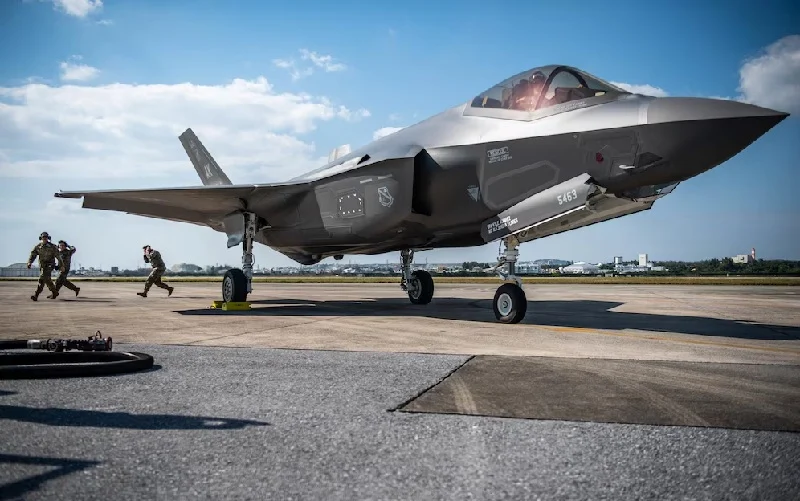
Understanding how a fighterjet works means understanding its core systems:
✦ Airframe
Made of lightweight, high-strength materials like titanium and composites to ensure strength and stealth.
✦ Engine
Usually equipped with one or two turbofan engines, capable of afterburners to boost speed.
✦ Avionics
Includes radar systems, GPS, infrared targeting, and electronic warfare systems.
✦ Weapons
- Air-to-air missiles (AIM-120, R-77)
- Air-to-ground missiles (AGM-65 Maverick)
- Cannons (like the M61 Vulcan)
- Smart bombs and nuclear weapons (in some roles)
✦ Cockpit
Advanced glass cockpit with Head-Up Displays (HUD), touchscreens, voice command, and pilot-friendly ergonomics.
Top Fighterjets in the World (2025)
Here’s a list of the most advanced fighterjets in 2025, ranked for performance, stealth, versatility, and combat record.
1. F-22 Raptor (USA)
- 5th Gen stealth fighter
- Unmatched air dominance
- Supercruise and advanced avionics
2. F-35 Lightning II (USA)
- Multi-role stealth fighter
- Comes in 3 variants: A, B (STOVL), and C (Carrier)
- Used by many NATO countries
3. Sukhoi Su-57 (Russia)
- Russia’s 5th gen stealth fighter
- Supermaneuverability, stealth, and hypersonic missile capability
4. Chengdu J-20 (China)
- China’s stealth fighter
- Long-range interceptor and air superiority roles
5. Rafale (France)
- 4.5 gen multi-role fighter
- Used by India, France, Egypt, and more
6. Eurofighter Typhoon (EU)
- European-built advanced multirole fighter
- Excellent agility and weapon systems
7. JAS 39 Gripen (Sweden)
- Light, cost-effective multirole fighter
- Used by multiple air forces worldwide
Role of Fighterjets in Modern Warfare
Fighterjets are pivotal in modern military operations. Their speed and flexibility make them indispensable:
✪ Air Superiority
Dominating the skies is the primary goal in any war. Fighterjets eliminate enemy aircraft to establish air dominance.
✪ Precision Strikes
With guided missiles and smart bombs, fighterjets can neutralize high-value targets with pinpoint accuracy.
✪ Reconnaissance
Advanced sensors and cameras allow them to collect intelligence from hostile areas.
✪ Deterrence
Possessing advanced fighterjets signals strength, often preventing potential conflicts.
Fighterjet vs Bomber vs Drone
| Feature | Fighterjet | Bomber | Drone |
|---|---|---|---|
| Speed | Very High | Moderate | Moderate |
| Crew | 1–2 | 2–5 | 0 |
| Stealth | Yes (5th gen) | Yes (some) | Yes (some) |
| Role | Combat (Air/Air & Ground) | Heavy Bombing | Recon, Strike |
| Cost | High | Very High | Varies |
Fighterjets are fast, versatile, and more likely to engage in dogfights, unlike bombers (strategic roles) or drones (unmanned operations).
Future of Fighterjets: 6th Generation and Beyond
The 6th generation fighterjets are currently under development and expected to revolutionize air combat.
Features to Expect:
- AI-assisted decision-making
- Hypersonic weapons
- Directed-energy weapons (lasers)
- Swarm drone integration
- Increased autonomy and reduced pilot load
Upcoming Programs:
- NGAD (Next Generation Air Dominance) – USA
- FCAS (Future Combat Air System) – EU
- Tempest – UK, Italy, Japan
- Mikoyan PAK DP – Russia
Fighterjet Training and Pilots
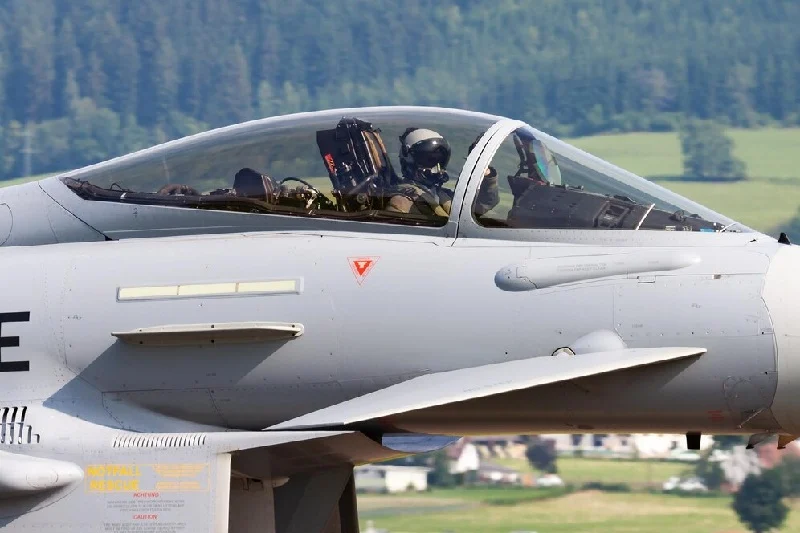
Flying a fighterjet is one of the most challenging and elite professions in the world.
Pilot Training Includes:
- Flight school and combat simulation
- High-G force tolerance training
- Mission planning and execution
- Night flying and air refueling
Top Fighter Pilot Traits:
- Quick reflexes
- Situational awareness
- Physical fitness
- Technical knowledge
Training costs millions of dollars per pilot and takes several years to complete.
FAQs About Fighterjets
❓ How fast can fighterjets go?
Modern fighterjets like the F-22 can reach speeds of over Mach 2.25 (1,500 mph or 2,400 km/h).
❓ What is stealth in a fighterjet?
Stealth reduces visibility to radar and sensors using special shape, materials, and coatings.
❓ Are fighterjets used in peace time?
Yes. They patrol borders, escort aircraft, participate in joint exercises, and respond to intrusions.
❓ How much does a fighterjet cost?
- F-35: ~$80 million
- F-22: ~$150 million
- Su-57: ~$50–60 million (estimated)
- Maintenance and operating costs can reach $30,000–$70,000 per hour.
❓ Can fighterjets land on aircraft carriers?
Yes, but only specially designed jets like the F-35C or MiG-29K can operate from aircraft carriers.
Conclusion
The fighterjet is not just a weapon of war but a marvel of modern engineering and innovation. With their unmatched speed, agility, and lethal capabilities, fighterjets will continue to be at the forefront of military power for decades to come. As new technologies like AI, quantum sensors, and hypersonic systems evolve, the sky is no longer the limit—it’s the new battlefield.